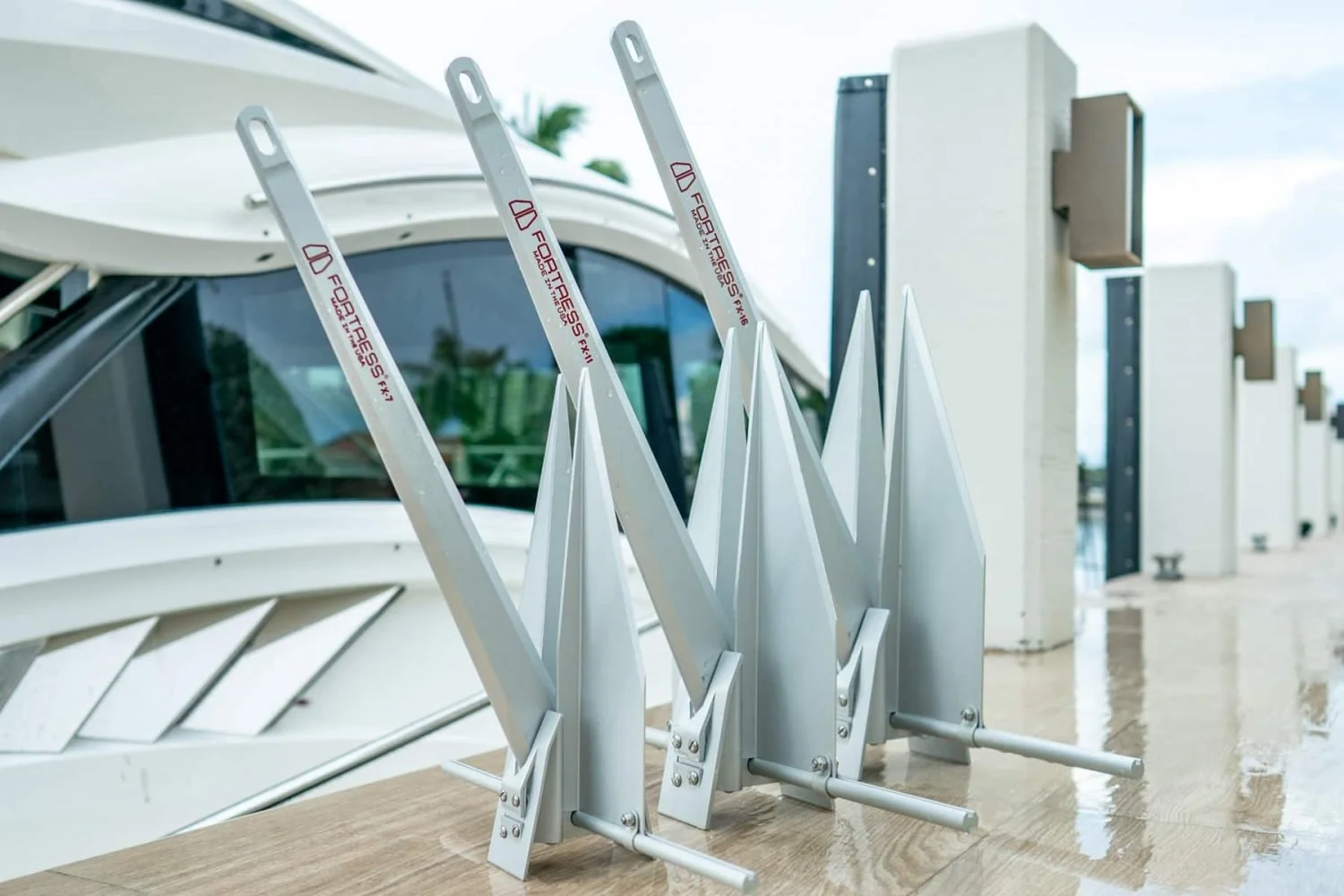
Anchoring a boat looks simple until wind, current, traffic, and shallow water all start working against you. This sums up Crab Island in a nutshell.
Anybody can drop an anchor over the side. The real question is whether it is going to hold, whether you left yourself enough room, and whether your boat is going to swing into somebody else once the wind or tide changes.
Around Destin, this matters. Whether you are anchoring near Crab Island, stopping in calmer water, setting up for a swim, or just trying to enjoy a few hours on the boat, anchoring is one of those basic skills that can make or break the whole day.
A lot of new boaters do not struggle because they are careless. They struggle because nobody ever showed them the right way to think through it.
Anchoring Is More Than Just Dropping the Hook
The biggest mistake I see is people treating the anchor like a parking brake.
They get to a spot, slow down, throw the anchor out, let out a little line, and assume they are done. I even see people not come to a complete stop before dropping the anchor.
That might work on a perfect calm day with no current and nobody around. But that is not how boating usually works in Destin.
Wind moves the boat. Current moves the boat. Wakes move the boat. The tide changes. Other boats move around you. If the anchor is not set right, you may not realize there is a problem until you are already drifting.
That is when things get stressful.
Before You Drop Anchor, Stop and Look Around
Before you anchor, take a minute and read the area.
Look at which way other boats are sitting. Look at their anchor lines. Look at the water movement. Look at the wind direction. Look at whether boats are swinging or sitting steady.
This tells you what your boat is probably going to do once the anchor is down.
A lot of people rush this step. They see an open spot and head straight for it. Then they realize too late that the current is pushing them sideways or the wind is going to swing them closer to another boat than they expected.
Slow down. Watch first. Then move.
I talked more about this in my article on How Weather Affects Your Boat and What to Watch Before You Leave the Dock.
Pick Your Spot Before You Are in the Middle of It
Do not wait until you are surrounded by boats to figure out where you want to anchor.
Pick your spot early. Think about where the boat will end up after the anchor is set, not just where the boat is sitting when you drop it.
That part matters.
Your boat will usually drift back after you drop anchor. It may also swing depending on wind and current. So the spot where you drop the anchor is not always where your boat will finally sit.
You need to picture the whole setup.
Where is the anchor going down?
How much line are you letting out?
Where will the boat settle?
How much room will you have to swing?
What happens if the wind shifts?
What happens if the tide changes?
That sounds like a lot, but once you get used to it, it becomes natural.
Do Not Drop the Anchor Straight Down and Call It Good
This is one of the most common anchoring mistakes.
People stop the boat (or not), drop the anchor straight down, let out a short amount of line, and think they are anchored.
The problem is the anchor needs angle and pull to dig in. If the line is too straight up and down, the anchor may just sit on the bottom instead of setting properly.
Then a gust of wind, a little current, or a boat wake comes through and the anchor starts dragging.
A better approach is to lower the anchor, let out enough line, and allow the boat to drift or back down so the anchor can dig in.
Do not just throw it and hope.
Use Enough Anchor Line
Anchor line length matters.
If you do not let out enough line, the anchor has a harder time grabbing and holding. The line needs enough angle for the anchor to bite into the bottom.
In simple terms, too little line pulls the anchor upward. More line helps pull the anchor sideways into the bottom where it can hold better.
That does not mean you throw out every foot of line you own in a crowded area. You still have to be smart and consider swing room. But not using enough line is one of the fastest ways to drag anchor.
In shallow areas, people sometimes get lazy because the water is not deep. That is where they mess up. Shallow water does not mean you only need a few feet of line.
You still need enough scope for the anchor to work. The general rule of thumb is a ratio of 7:1. This means for every foot of water depth you should let out 7 feet of line.
Set the Anchor Before You Relax
Once the anchor is down, do not immediately act like the job is done.
Watch the boat.
Pick a reference point on shore or another fixed object. Watch your position. See if the boat is holding or slowly sliding. Give it a few minutes before everyone jumps in, opens coolers, ties off floats, and forgets about it.
You can also gently back down to help set the anchor, depending on the situation and how much room you have.
The key is simple: make sure the boat is actually holding before you trust it.
This is especially important at Crab Island. I covered more of that in Crab Island Boating Tips: What to Bring and What Most Boaters Get Wrong.
Wind and Current Do Not Always Match
One of the trickier parts about anchoring around Destin is that wind and current may not be moving the same direction.
Sometimes the current is pulling one way and the wind is pushing another. When that happens, your boat may not sit the way you expect.
The bow may point into the current. The stern may get pushed by the wind. The boat may swing side to side. It may feel like it is sitting crooked compared to other boats. In some situations this is where a stern anchor comes in handy.
This is where new boaters get uncomfortable because the boat does not behave like a car.
Boats slide. Boats pivot. Boats drift. At slow speed, wind and current can control the boat fast if you are not ahead of it.
That same issue shows up around docks too. I broke that down in How to Dock a Boat in Wind: Real Tips That Work in Destin.
Give Yourself Swing Room
When you anchor, your boat needs room to move.
Even if the anchor is holding, the boat can still swing around the anchor point. That swing can change with wind, current, and tide.
This is why you do not want to squeeze into a tight spot, especially if you are still learning.
You need room in front of you, behind you, and beside you. You also need to think about where other boats are anchored and how much line they may have out.
Two boats may look far enough apart at first, but if they swing differently, they can end up too close.
At Crab Island or any busy anchorage, more space is your friend. Being a little farther from the action is better than dragging into somebody’s boat or having to reset in front of a crowd.
Do Not Anchor in a Channel
This should be obvious, but it still needs to be said.
Do not anchor in a marked channel, traffic lane, or anywhere boats need to safely pass through.
It is not just annoying. It is dangerous.
Stay clear of active traffic areas. Think about where other boats need to go, not just where you want to sit.
A good anchoring spot is not just about the view. It is about safety, room, holding, and not being in the way.
Be Careful Around Swimmers and Props
Anchoring usually means people are going to get in the water. That adds another layer of responsibility.
Before anyone gets in, make sure the anchor is set and the boat is stable. One thing I like to do when I am on an outboard powered vessel is to turn the motors away from the swim ladder as much as possible. This gives you just a little bit of extra room between people and propellers.
Before starting the engine again, make sure everyone is back on board or clearly away from the boat. Check the stern. Check the swim ladder. Check lines, floats, ropes, and anything that could get near the prop.
In crowded areas, you also need to watch swimmers from other boats. Not everyone stays where they should.
Take your time. This is not the place to rush.
Common Anchoring Mistakes New Boaters Make
Most anchoring problems come from the same few mistakes.
Dropping the anchor straight down
Not using enough line
Not checking if the anchor is set
Anchoring too close to other boats
Forgetting about swing room
Ignoring wind and current
Letting people jump in too soon
Starting the engine without checking the water around the boat
Trying to reset while panicking
Waiting too long to fix a dragging anchor
None of these mistakes mean someone is a bad boater. They usually mean they have not had enough real practice yet.
But these mistakes can turn expensive fast.
A lot of the same slow-speed decision making shows up when docking too. I covered that in 5 Common Boat Docking Mistakes New Owners Make.
What to Do If Your Anchor Starts Dragging
If your anchor starts dragging, do not panic.
First, get people back on board if they are in the water and it is safe to do so. Start the engine only after checking around the boat and making sure no one is near the prop.
Then take control of the boat before it becomes a bigger issue.
Do not wait until you are almost on top of another boat. If you are moving and the anchor is not holding, deal with it early.
Pull the anchor, move to a safer spot, and reset with more room.
Dragging anchor is not the end of the world if you catch it early. It becomes a problem when people ignore it, freeze up, or try to save a bad setup instead of starting over.
Practice Before You Need It
The best time to learn anchoring is not in the middle of a packed Saturday at Crab Island.
Practice on a calmer day. Practice away from traffic. Practice dropping anchor, setting it, watching your swing, pulling it back up, and doing it again.
Learn how your boat reacts in reverse. Learn how fast it drifts. Learn how it sits in wind. Learn how much room you actually need.
That kind of practice builds confidence fast.
Videos and articles help, but nothing replaces time at the helm on your own boat.
Final Thoughts
Anchoring is one of the most important skills a boater can learn.
It affects safety, comfort, confidence, and how much you actually enjoy your day on the water.
Around Destin, wind and current are part of the deal. Crab Island, Destin Harbor, the bay, and the East Pass area all require boaters to pay attention and stay ahead of the boat.
The goal is not to be perfect. The goal is to slow down, think ahead, give yourself room, and understand what the boat is going to do before it does it.
If you are not fully comfortable anchoring, docking, handling current, or maneuvering your boat in tight areas, that is exactly what I help with.
Gulf Coast Boat Training offers hands-on boat driving lessons in Destin on your own boat. We work on real skills like docking, anchoring, slow-speed control, wind, current, and local boating confidence.
You can learn more here: Boat Driving Lessons in Destin, Florida.
Call or text Captain Chris at 850-502-1861 to schedule a lesson.
